

Offline stores in the online space – where do we start?

In today’s digital age, having an online presence is essential for a successful business, even for those primarily operating in the offline space. By establishing your online presence, you can reach more customers, increase your brand recognition, and generate higher revenue. In this article, we’ll show you how to succeed in the online space as an offline store.

Website:

Your website is the starting point for your online presence. Through your website, you can showcase your business, let visitors see your products and services, and display additional materials that prepare for further purchases. Here are some tips for creating a website:

  • Choose a user-friendly, easily digestible, and modern design that’s attractive and truly reflects your brand.
  • Optimize your website for search engines to appear in search results and gain organic traffic.
  • Use popular content management systems (CMS) like WordPress, Shopify, or Wix, which allow you to create your website, and provide support in Hungarian.

Social media:

Social media platforms simplify communication with your customers and enable you to connect with new potential customers. On these platforms, you can share news about your business, showcase new products, and interact with your followers. How to use social media effectively?

  • Choose a platform where your target audience is accessible and suitable for achieving your business goals. Instagram and Pinterest prioritize visual, pictorial content, while TikTok favors video content.
  • Create content that resonates with your followers and encourages them to interact with your business.
  • When it comes to content creation, always be consistent and watch your followers’ feedback.

Local search:

Local search is crucial for an offline business, as it allows you to offer your business to people who are in your area and are looking for the product or service you provide. For local search engine optimization:

  • Create a Google My Business account and share as much content about your business as possible.
  • Look for strategic partners with whom you can mutually support each other and share each other’s website links on your own pages, thereby strengthening each other’s organic placements. Such partners can be local libraries, cultural and community centers, or other local businesses.

E-mail marketing

Email marketing is one of the most effective ways to keep in touch with your customers. You can send newsletters with various offers, promotions. What do you need for successful email marketing?

  • Encourage visitors to subscribe to your newsletter with various actions, discounts, coupons, or exclusive content.
  • Plan newsletter campaigns that can promote your offer.
  • Use free newsletter sending software like MailChimp or MailerLite, which allows you to create and automate your newsletter campaigns.

Conclusion

Therefore, to establish a successful online presence, you need to create a website, start interacting with your customers through social media platforms, be at the forefront of local search results, and regularly communicate with your customers via email marketing. We recommend starting small, progressing step by step, and laying the foundations. Try the strategies mentioned above and don’t hesitate to ask for help from other professionals. We wish you success in establishing your online presence!

What tools can you utilize to boost the average cart value of your customers in your online store?

In today’s digital age, online stores are increasingly popular, and businesses are constantly looking for tools to increase the basket value of their customers. The basket value represents the total value of goods or services purchased by a visitor in a single transaction. This is an indicator that measures the average order value of customers. The basket value is calculated by adding up the items in the visitor’s basket. For example, if a visitor buys three products at prices of 1000, 2000, and 3000 Forints, the basket value will be 6000 Forints. By analyzing the basket value, online store owners can identify trends related to their consumers’ behavior, such as which products visitors most often buy together, or at what price range they are most likely to purchase. In this article, we will examine tools that can help increase your customers’ basket value.

Upsell and cross-sell:

One effective way to increase the basket value is upselling and cross-selling. Upselling refers to recommending higher-priced products within the same product category, while cross-selling refers to recommending related or complementary products. For example, if your visitor buys a laptop, you could suggest a more expensive, professional model with more features or a related mouse, portable charger, or a comfortable travel bag as an accessory. Various tools are available that can automate and optimize upselling and cross-selling, such as Shopify App Store apps and the WooCommerce Product Recommendations extension.

Package Offers (Product Bundling):

Another effective way to increase the basket value is package offers, or product bundling. Package offers refer to the grouping of products and related, complementary products that can be resold at a discounted price. For example, if your online store visitor buys a mobile phone, you could offer them a package deal that includes a compatible mobile phone case and a screen protector film, all at a more favorable price. Bold Bundles and WooCommerce Product Bundles are tools that can help create and manage package offers. Discounts and promotions:

Discounts and promotions are also great tools to increase the basket value of your online store customers. For example, we can offer a discount on our returning visitors’ next purchase, give a gift with certain seasonal products, but we can also create periodic coupons for our stock, outgoing products. Numerous tools are available, such as Coupon Carrier and Advanced Coupons for WooCommerce, which can help create and manage discounts and promotions.

Personalization and product recommendations:

Personalization and product recommendations can also be effective in increasing the basket value of customers. By analyzing the behavior and preferences of our online store visitors, we can provide personalized recommendations that are relevant to their interests. This could be a personalized playlist, for example, or a recommendation for cosmetic products suitable for our skin type. Tools like Nosto and Product Recommendations for WooCommerce can help create a personalized experience and relevant product recommendations.

Conclusion:

In conclusion, there are many tools and strategies available that can help increase the basket value of your online store customers. Whether it’s about upselling and cross-selling, package offers, discounts and promotions, personalization and product recommendations, it’s important to try out each tool, experiment with them, and find out what works best for your online store. Remember! By increasing our customers’ basket value, we also increase our revenue and profit. In our next article, we will show you how international brands use these strategies and tools on a daily basis to increase their basket values!

Web Development in the Age of AI and Machine Learning

Discover how to integrate AI and machine learning into web development

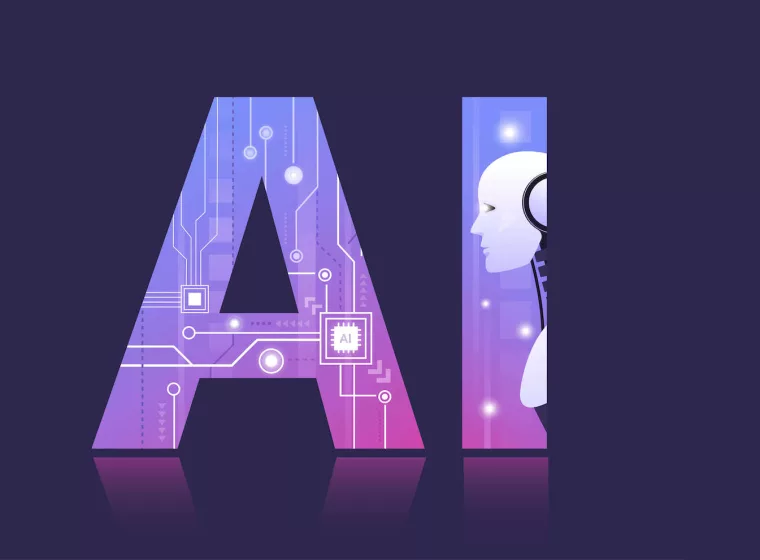
Over the past decade, AI (Artificial Intelligence) and Machine Learning (ML) have resulted in technological breakthroughs that have revolutionized web development. The application of AI and ML in web development enables personalized experiences, data analysis, and the creation of automated processes. In this blog post, we will detail how to integrate these technologies into web development.

Data Analysis

AI and ML offer significant advantages in the field of data analysis. For example, with the help of AI, web developers can make predictions about user behavior and offer personalized suggestions. Machine learning automates the analysis of data, allowing websites and applications to make intelligent decisions. This way, machine learning helps websites and applications optimize the user experience and increase conversions.

E-commerce is an area where AI and ML are capable of analyzing a huge amount of data quickly and efficiently. For instance, in an online store, AI algorithms can consider the user’s past purchases, browsing habits, and interests, then make predictions about potential purchases using these algorithms. Through such predictions, companies may be able to create more targeted ads and offers, thereby increasing sales and customer satisfaction.

Personalized Offers

AI and machine learning enable web developers to offer personalized offers and content to users. As a result, the user experience becomes much more personal and relevant. AI and ML allow web developers to understand users’ needs and preferences accurately and make personalized offers based on these insights.

Online streaming services like Netflix or Spotify are excellent examples of how AI and machine learning can be used to provide personalized offers. AI algorithms analyze user behavior, such as what movies or songs they watch or listen to, and what ratings they give, and then make personalized offers based on this information. The end result? Users receive content that truly interests them, leading to more time spent on the site and a higher likelihood of becoming loyal customers.

Automated Processes

AI and machine learning enable the automation of processes in web development. For instance, chatbots and virtual assistants allow for the automated handling of user questions and issues. AI and ML enable web developers to create automated systems that increase efficiency and reduce costs.

Chatbots and virtual assistants are excellent examples of automated processes supported by AI and machine learning. Think of Facebook Messenger bots, which can answer user questions, provide information about products, or even handle purchases. Automated systems can increase efficiency, reduce the number of errors, and ensure users receive quick and accurate responses.

Conclusion

The use of AI and machine learning in web development enables developers to provide a more efficient and personalized user experience. Data analysis, personalized offers, and automated processes all contribute to the success of websites and applications. AI and machine learning are the future of web development, and we can’t wait to see what new and exciting opportunities these technologies bring.

Posted in AITagged